
An engineer who became a teacher, and never stopped looking for potential.
I help GCSE and A Level students, and their parents, see what they are truly capable of in Maths, then get them there.
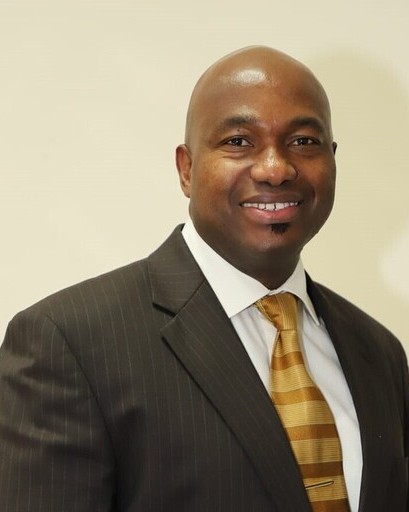
Someone saw potential in me before I had the qualification. I have been paying it forward ever since.
I graduated with an Engineering degree and started my career as an IT Engineering Technician. After the dotcom recession in 2000, I moved into education as a Design and Technology Technician in a secondary school.
School leaders gave me the chance to teach before I held a formal teaching qualification. That was uncommon, and their confidence in me is what made me believe I could make a genuine difference. The school then supported me through a Master's degree and Graduate Teacher Training.
The lesson that changed how I teach
My early years in the classroom were not easy. Like many new teachers, I focused on subject knowledge and lesson delivery. Over time I learned that great teaching depends just as much on relationships: understanding each learner, building trust and adapting to how they learn. When I did that, behaviour and engagement changed, and so did results.
What I do now
I have spent over 20 years in secondary education, further education and sixth form colleges, lecturing in mathematics, engineering and related subjects. Alongside that I built a private tutoring practice in GCSE Maths, GCSE Further Maths, GCSE Physics, AS Maths and A Level Maths, which has grown almost entirely through referrals.
I have seen a student capped at grade 5 on the Foundation tier move to Higher and achieve an A. I have seen a Year 8 student sit GCSE Maths in Year 9 and achieve an A, and go on towards a career in medicine.
I do not simply teach subjects. I identify potential, remove barriers to success and help learners achieve outcomes they once believed were beyond their reach.Reynold Thomas
The proof behind the story.
Assess the potential first. Then close the gaps.
Five stages: assess potential, not just current performance. Diagnose the specific knowledge gaps. Build confidence and motivation. Develop mastery through structured learning. Measure progress and raise expectations. What I deliberately do not do is accept a predicted grade or a tier as the final word.
Engineering discipline, teaching craft.
HNC in Electrical and Electronic Engineering (Distinction in the Engineering Project), BEng (Hons) in Telecommunications and Computer Network Engineering, a Master's degree in Computer Systems and Networks, and the PTLLS, CTLLS and DTLLS teaching qualifications.
Ready to see where your child really stands?
The free Grade Forecast is the quickest way to begin.
See the ways to begin →